Discussion systems with chairman and delegate microphones
We design and install Vissonic and Relacart Conference discussion systems, wireless or wired, for municipal councils, courts, parliaments, universities and boardrooms across Chile. Each seat has its own microphone and request-to-speak button; the chair manages the floor from their unit.
A debate system gives each seat a microphone with a request-to-speak button and gives the chair a unit with priority. ProAVCom installs the Vissonic CLEACON and Relacart CS-302, CS-501, WDC-903 and WDC-943 lines, wired or wireless, in councils, courts, parliaments, universities and boardrooms.
What is a discussion system and how does it work?
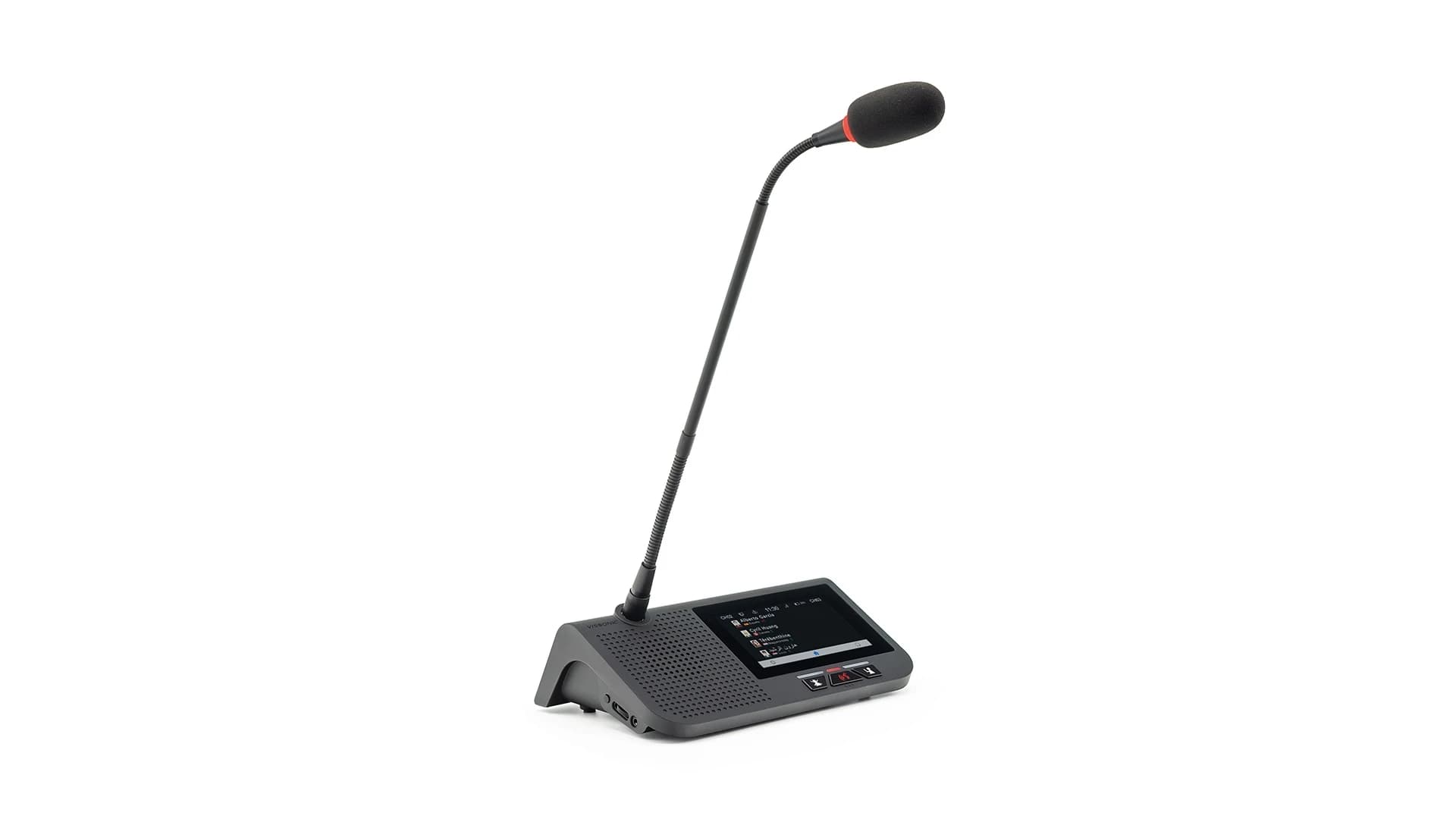
A discussion system, also called a debate system, manages who has the floor in a session room. Each participant has a delegate unit with a microphone, a request-to-speak button and a loudspeaker; whoever chairs the session has a chairman unit with priority, which can mute everyone and approve or reject requests. A central unit controls how many microphones can be open at once and sends the audio to the room's sound system, to recording and to streaming. How the floor is given is set to match each room's rules: open (anyone can switch on their microphone up to the configured maximum), first in, first out (a new speaker replaces the earliest one), on request (the chair approves each speaker) or voice-activated (the microphone opens when someone speaks). In Vissonic wireless systems these modes are called OPEN, OVERRIDE, APPLY and VOICE, and Relacart adds a limited-time mode. On the same platform you can add electronic voting, simultaneous interpretation, card-based identification, cameras that automatically frame whoever is speaking, and Dante output to send the audio to recording, videoconferencing or the session's live stream.
Wired vs. wireless discussion systems: the differences
The discussion functions are the same in both; what changes is the installation, the power supply and the type of room each one suits.
| Aspect | Wired | Wireless |
|---|---|---|
| Installation | Units are daisy-chained with system cable (CAT5e on digital models), under the table or through conduit. | No cables on the table: each unit links by radio to access points or to the central unit. |
| Power | Powered from the central unit; no batteries. | Rechargeable batteries lasting from about 10 to over 20 hours depending on the model, with chargers for several batteries at once. |
| Reliability | The highest: it doesn't depend on radio frequencies. In Vissonic systems, the ring network keeps working even if a unit fails. | High with a well-designed network: Vissonic uses encrypted 5 GHz WiFi (128-bit); Relacart uses UHF audio with LoRa control and automatic frequency selection. |
| Best for | Permanent session rooms in daily use, and new or renovated buildings where cabling can be run. | Heritage or leased buildings that can't be altered, multipurpose rooms and layouts that change. |
| Vissonic equipment | Wired CLEACON: VIS-DCC (delegate) and VIS-DCC-T (chairman) units with the VIS-DCP2000-D processor. | Wireless CLEACON: VIS-WDC units with the VIS-DCP2000-W processor and VIS-AP4C access points; VIS-MAW-T multimedia units with touchscreen. |
| Relacart equipment | CS-302 (up to 30 units, with Dante output and camera control) and the digital CS-501 (up to 200 units). | WDC-903 and WDC-943 (with a 17-capsule array microphone); the WDC-903M controller has Dante output. |
| Projects in Chile | Chamber of Deputies (Relacart CS-302) and Municipality of San Fernando (Vissonic CLEACON, 20 seats). | Santiago Court of Appeals (40 Vissonic units), University of Talca (37 seats) and Regional Government of Maule (Relacart WDC-903). |
Capacities and battery life according to each manufacturer's datasheets; they vary with model and configuration.
Where are discussion systems used?
A discussion system makes sense wherever several people speak in turn and what is said must be clearly heard in the room, recorded or streamed:
- Municipal councils: mayor, councillors and municipal secretary
- Regional councils and legislative committees
- Court plenary sessions and hearing rooms
- University councils and academic boardrooms
- Company boards and committees
- Assemblies, congresses and forums where people speak in turn
Vissonic and Relacart discussion systems in Chile
We work with the two lines we officially represent in Chile. Vissonic CLEACON offers wired systems on a digital ring network, expandable to 5,200 units with expansion modules, and wireless systems over encrypted WiFi, including multimedia units with a touchscreen. Relacart Conference offers the wired CS-302 and CS-501 systems and the wireless WDC-903 and WDC-943, with Dante output on the CS-302 and the WDC-903. We choose the line according to the number of seats, the type of room and the functions required (voting, interpretation, cameras or recording), and we deliver the system installed, configured and with training for the people who operate it.



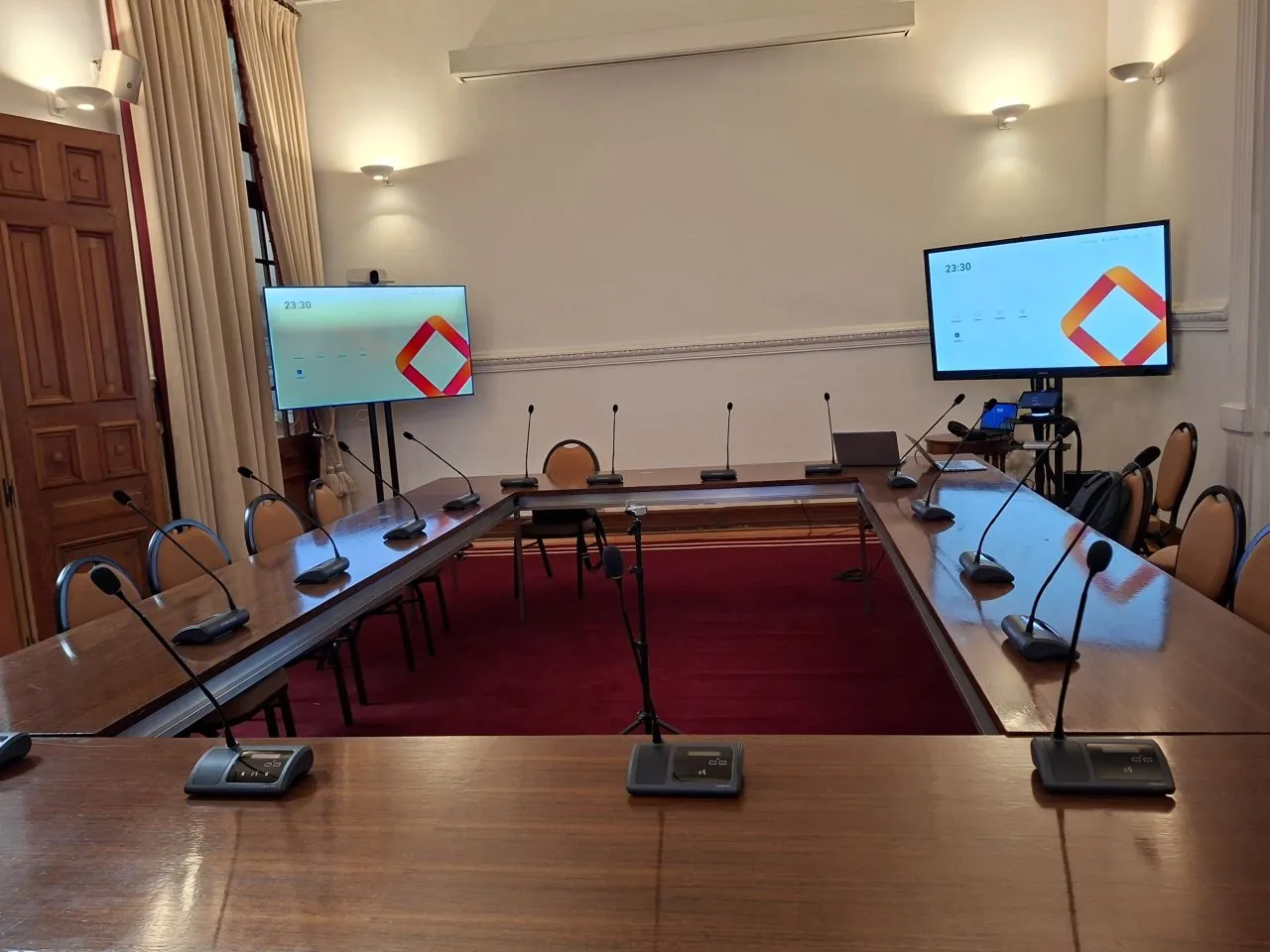
Installations still operating today


Discussion system FAQ
What is the difference between a discussion system and a conference system?
In practice the terms are used almost interchangeably. "Discussion system" or "debate system" usually refers to the core function, requesting and granting the floor with chairman and delegate units, while "conference system" also covers voting, simultaneous interpretation, participant identification or session management. Neither is a videoconference like Zoom or Teams, although both can be connected to one.
How many microphones does a municipal council need?
One per councillor, a chairman unit for the mayor, who chairs the council, and usually one for the municipal secretary, who certifies the proceedings. Under Chilean law (Ley 18.695), councils have 6, 8 or 10 councillors depending on the number of voters in the municipality, so 8 to 12 units is typical, plus one or two for officials or guests who present.
How many microphones can be open at the same time?
It's set on the central unit. In the wireless systems we install, the maximum ranges from 5 to 8 open microphones at once depending on the model, and in session rooms it's usually limited to one or two to keep order. The chair can always take the floor with the priority button, which mutes the delegates.
How long do the batteries of wireless units last?
Depending on the model, from 10 to over 20 hours of continuous use: enough for one or several full sessions. Batteries are recharged between sessions in multi-battery chargers, and some Vissonic multimedia units can also be powered over the network cable (PoE) or from a charging base.
Can the session be recorded or streamed on Zoom, Teams or YouTube?
Yes. The central unit sends the mixed audio to the room's sound system, to recording and to the streaming or videoconferencing equipment; several models record directly to USB, and those with Dante send the audio over the network. PTZ cameras can also automatically frame whoever switches on their microphone, so the stream follows the debate without an operator.
How much does a discussion system cost?
It depends on the number of seats, whether it's wired or wireless, the equipment line and any added functions such as voting, cameras, recording or interpretation, plus installation and integration with the existing audio. With the number of seats and a few photos or a floor plan of the room, we prepare a proposal at no cost, and if the project goes to public tender we can help define the technical specifications.
Planning a room? We'll contact you
Leave your details and the type of room, and a specialist will contact you within 24 business hours.